Overview
Conservation voltage reduction (CVR) uses Volt-VAR optimization (VVO) methods to reduce customer power demand by controlling feeder’s voltage control devices. The objective of this work is to present a VVO approach that controls system’s legacy voltage control devices and coordinates their operation with smart inverter control.The volt-var optimization (VVO) is one of the most critical applications currently being adopted by the majority of distribution companies and made available by most ADMS vendors to manage system outages [CIT1].
This report documents the volt-var optimization application developed by Washington State University (WSU) and demonstrate its functionality by integrating it with a standards-based open-source platform – GridAPPS-D, developed by the Pacific Northwest National Laboratory (PNNL).
Application Architecture
The proposed volt-var optimization (VVO) application can be implemented in an advanced distribution management system (ADMS) as shown in Figure 1. Figure shows the overall architecture of a modern DMS with integration of several subsystems such as customer information system (CIS), geographical information system (GIS), advanced metering infrastructure (AMI), SCADA and flowchart of the proposed VVO framework..
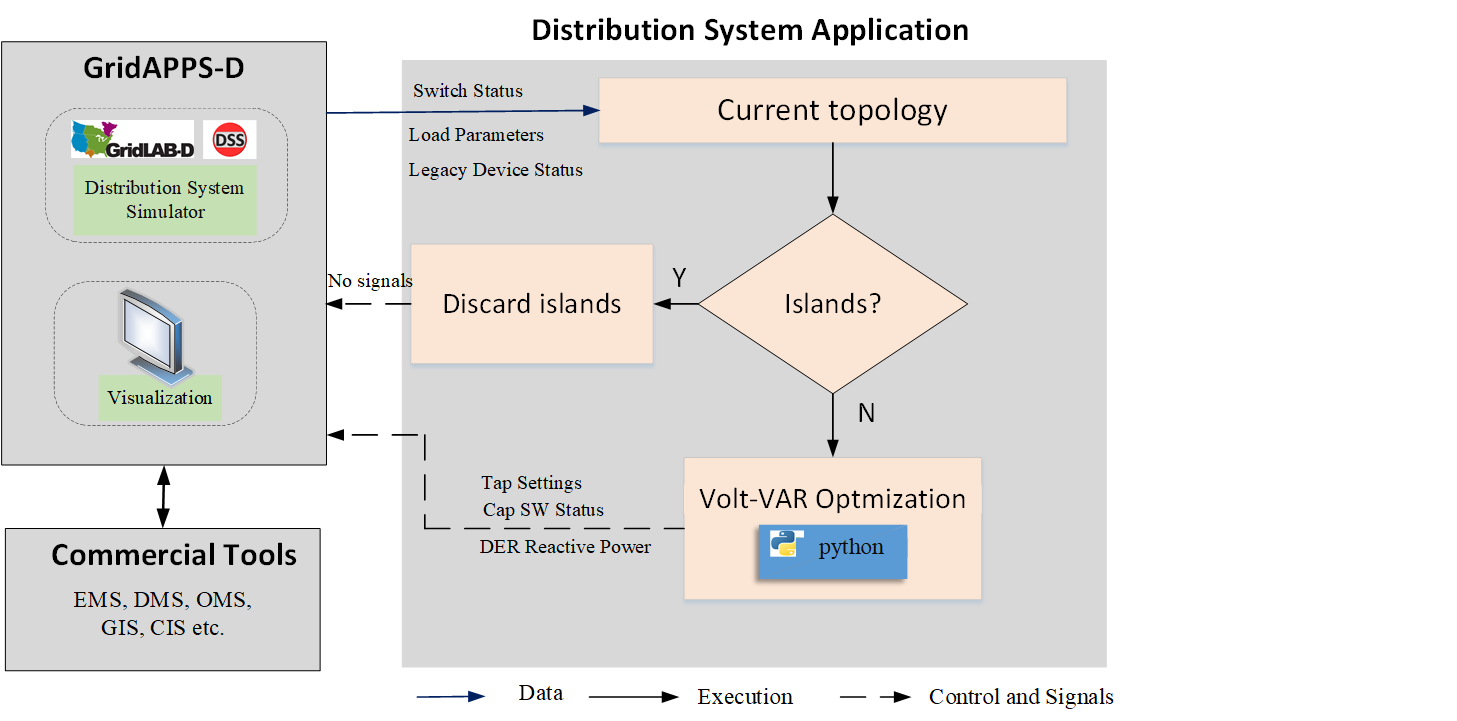
Figure 1: Flowchart of the proposed VVO application.
Leveraging the GridAPPS-D Platform
The realization of an autonomous volt-var optimization application requires a measurement and control environment that provides current toplogy of the system and the ability to remotely deploy the decisions for conservation voltage reduction. GridAPPS-D is an open-source, standards-based platform designed to support the development of advanced, data-driven distribution system operation and/or planning applications that take advantage of the data-rich environment expected in modernized electric power distribution systems with smart grid technologies.
Figure 2 shows a schematic for the interaction and communication among the distribution system operational sub-system for the proposed volt-var optimization application. The platform is typically integrated with other related data and decision-support systems/subsystems such as DERMS, SCADA, OMS, GIS, AMI, CIS to: a) monitor the distribution system conditions, b) obtain the status of legacy device c) status of DERs and operating conditions, and d) for load estimation and control.
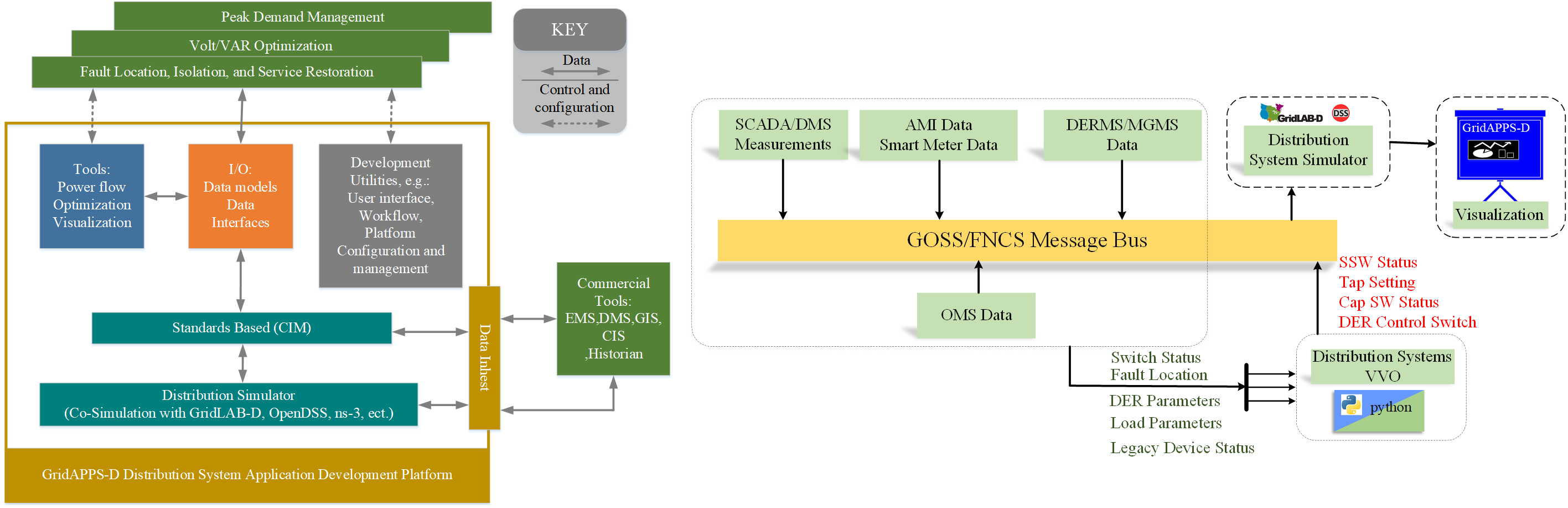
Figure 2: Integration of proposed application to the GridAPPS-D platform. GOSS/FNCS is the PNNL’s platform for data exchange among subsystems. GOSS: GridOPTICS Software System; FNCS: Framework for network simulation.
Definition of Terms
Fault - Opening of normally-closed switch in response to any abnormal operating condition on its downstream.
Platform - Refers to GridAPPS-D platform.
Simulation - A real world distribution system currently done by GridLAB-D
Simulator - In current release GridLAB-D serves as the simulator.
CPLEX - A commercial optimization software package for solving the large-scale optimization problem
GridLAB-D - GridLAB-D is a distribution level powerflow simulator. It acts as the real world distribution system in GridAPPS-D.
Power System Model - A modified IEEE 8500 model is used and is referred as IEEE 9500-node model.
References
| [CIT1] | A. Dubey, A. Bose, M. Liu and L. N. Ochoa, “Paving the Way for Advanced Distribution Management Systems Applications: Making the Most of Models and Data,” in IEEE Power and Energy Magazine, vol. 18, no. 1, pp. 63-75, Jan.-Feb. 2020 |
| [CIT2] | Rahul R Jha; Anamika Dubey and Kevin P. Schneider, “Coordinated Control for Voltage Regulation of Unbalanced Power Distribution System: Centralized and Local Control Methods,” in IET Smart Grid (Submitted). |
| [CIT3] | Rahul R. Jha; Anamika Dubey; Chen-Ching Liu; Kevin P. Schneider, “Bi-level Volt-VAR Optimization to Coordinate Smart Inverters with Voltage Control Devices”, in IEEE Transaction on Power System, vol. 34, no. 3, pp. 1801–1813,2019. |
| [CIT4] | R. R. Jha and A. Dubey, “Exact distribution optimal power flow (d-opf)model using convex iteration technique,” 2019 IEEE Power EnergySociety General Meeting (PESGM), Aug 2019, pp. 1–5. |
| [CIT5] | Rahul R Jha and Anamika Dubey,“Coordinated Voltage Control for Conservation Voltage Reduction in Power Distribution Systems”, IEEE Power and Energy Society General Meeting (PESGM), Aug 2020, pp. 1–5. |
| [CIT6] | Rahul R. Jha, S. Poudel, A. Dubey, and K. P. Schneider, “Volt-VAR Optimization Application Using GridAPPS-D – Standards-Based Open-Source ADMS Platform,” in prep for IEEE Power and Energy Technology Systems Journal |
| [CIT7] | Rahul R Jha and Anamika Dubey,“Local Smart Inverter Control to Mitigate the Effects of Photovoltaic (PV) Generation Variability”, in North American Power Symposium (NAPS) 2019. |
| [CIT9] | W. H. Kersting, “Radial distribution test feeders,” in 2001 IEEE Power Engineering Society Winter Meeting. Conference Proceedings (Cat. No.01CH37194), 2001, pp. 908-912 vol.2. |
| [CIT10] | R. F. Arritt and R. C. Dugan, “The IEEE 8500-node test feeder,” in IEEE PES T&D 2010, pp. 1-6. |
Contact Us
WSU team can be reached at rahul.jha@wsu.edu or anamika.dubey@wsu.edu.
For more information about the lab, Click Here